An Advent Calendar for my Friends: December 10


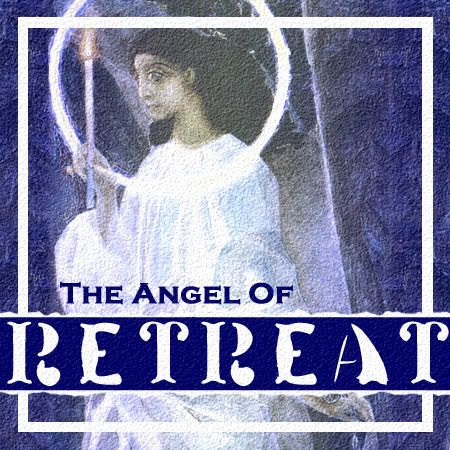
Angel of Retreat
Mickail Vrubel. Angel with Censer and Candle.
Sketch for Vladimir cathedral (Kiev) Fresco 1887.

The Angel of Retreat

by Anselm Grün

During the fourth century a great movement of retreat developed in the Church. They were monks who were sick of the turmoil of the world and who were disappointed of the way the Church was becoming more and more gentrified. They went on a retreat in the desert to live as recluses, to face their own truths in separation from the world and to follow their deepest desire of experiencing God in prayer and becoming one with Him. The surprising thing is that it was those who had gone on retreat from the world who had an amazingly potent effect on the world. Droves of pilgrims and supplicants took the road from Rome and Athens to the deserts of Egypt to ask the monks for guidance. Obviously they felt that those men, who had the courage to retreat from the world in order to face the truth of God, knew more about people than the philosophers and physicians who were entrenched in the turmoil of the world.

Now and again probably everyone needs a retreat from the turmoil and hectic of everyday life. Or we would lose ourselves in the hubbub. We are merely functioning, but we are not truly alive any more, we are not really ourselves any more. If you go on a retreat to a quiet place, it can happen that you take the turmoil of your world with you, that it is not at all comfortable to be confronted with everything that boils up inside you. And it may take some time until you have freed yourself from the problems of your everyday life. Only then the inner retreat begins. You withdraw, you step back from what you are doing, what keeps you preoccupied. You get in touch with yourself, you discover what moves you in the depth of you heart. You perceive your deeper truth. Sometimes this is painful. But if you behold it and you offer it to God Who accepts you just the way you are, then you will experience at the same time inner freedom and joy. You feel your uniqueness and exceptionality. You feel that you are precious and relevant because you can leave a trace in this world that only you can create. And perhaps you will discover then that there is a source inside you that is effervescent inside you and will never run dry because it is a source of divine origin, the source of the Holy Spirit.

The Angel of Retreat wants to encourage you, too, to withdraw at times from your spouse or friend. If you are with someone all the time, you will soon feel constricted. Then you are sticking together. And this is not beneficial for either of you. You need the space of freedom between you so that each of you can breathe and contribute their uniqueness to the relationship. Sometimes you may be hear reproaches from your wife or your husband if you go on a retreat like that. But I know many who have tried this. They have realized that this has been also beneficial for their togetherness. As you will be wholly yourself again because of it. It is like fitness program that brings you back in contact with your own energies. Then being together gets lively again, you have the imagination and the impetus again to try something new with your spouse or your friend, to be responsive to them again. If you go on a retreat, you will feel that you are not only defined by your partner, but that you need a more profound reason of existence, your own source, God, Who created you as a unique and exceptional person. Therefore I wish that the Angel of Retreat may show you when it’s time for you to withdraw. And I wish that you may then experience that you are not alone, but that the Angel of Retreat is with you and will reveal new horizons in your life for you.

© by Anselm Grün, 50 Engel für das Jahr, 1997;
translation by JunoMagic.

Song for December 10:

Angel of Retreat

Hagia Sophia
by Hans-Jürgen Hufeisen,
album “Das Engelskonzert” (“Concert of Angels”)
Posted in JunoMagic | Tagged , | 1 Comment

An Advent Calendar for my Friends: December 9


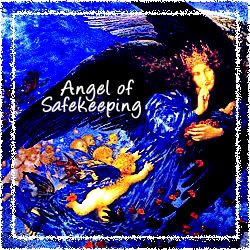
Angel of Safekeeping
Hughes, Edward Robert:
Night and Her Train of Stars, 1912.
Watercolour, height 755 mm, width 1245 mm,
Birmingham Museums & Art Gallery

Angel of Safekeeping

by Anselm Grün

A German word for “to keep safe/to preserve” is “bewahren”. This derives from Old High German wara and means “attentiveness, heeding, care, custody”. It means that we should take care and deal attentively with everything we experience, with everything we hear, see and understand. Especially in our time of haste we need the Angel of Safekeeping; not in order to cling to the past, but in order not to lose the treasure of what our experiences in the hectic of daily life. In our fast moving time we quickly lose sight of what we have seen. We move from one impression to the next. But that way nothing can grow inside us. We feel riven. We cannot really savour what we have experienced today. Many people are incapable of intensely living the present, to really feel what they are experiencing. Thus they need more and more potent impulses from the outside to be able to feel anything at all.

The early monks developed a method of how to be able to live completely in the present. It was a method of meditation, or how they called it, ruminatio. “Ruminari” means “to chew the cud”, “to ruminate”. So they took words of the scriptures into their mouths and chewed on them again and again. They repeated them in their hearts, considered them, looked at them anew, gazed at the word from all perspectives. Thus a single word of the scriptures could occupy them for days. Thus the word turned to flesh in them. It transformed them. It kept them grounded amid the turmoil of their spirits and the noise of the world. And it enabled them to be completely in the moment. There was nothing more important for them than to be present in the presence of God.

There is a wonderful saying that compares the way we treat the word with the behaviour of the horse and the camel. The camel makes do with little food, chewing the cud again and again. The horse needs a lot of food, it is always hungry. And Father Antonios admonishes us to treat the word of God not like a horse, but like a camel. We should not voraciously gobble up new things over and over again, but keep the little that we have heard and read in our hearts. Then it can transform us. Then we can live on it. In prison in Tegel Dietrich Bonhoeffer writes how he recalls memories and how they are consolation and light to him in the loneliness of his prison cell. He could keep encounters and experiences during services or concerts in his heart and live on them, in the cold of his time. His ability to hold on to healing words and experiences was an answer to the Hölderlin‘s lamenting question: “Woe me, where do I find the flowers and where the sunshine in wintertime?” He kept the blossoms of his experience with God so that they could flower even in the barren wasteland of brutal Nazi stooges. And he kept the sunshine in his heart so that the cold of reticent people could not be a danger to him.

The Angel of Safekeeping does not want to lead you to a conservative attitude or escapism. He rather wants to guide you to preserving and keeping safe your precious experiences, to hold on to them like a special treasure that you can admire over and over again. This endows your life with depth and wealth. You can persist in situations that are less than auspicious. You can also pass through wastelands without dying of thirst. Who does not have the ability to preserve something, will need new comfort over and over again, new nourishment, new experiences to be able to feel alive at all. The ability for safe-keeping keeps me alive even when I am cut off life, in situations of failure, in situations of paralysis. I wish that you are empowered by the Angel of Safekeeping to live intensely for every moment. He wants to give you the ability of Frederick, the hero of a children’s story, who gathered sunbeams and the colours of flowers in his heart during summer, so he could live on them in wintertime.

© by Anselm Grün, 50 Engel für das Jahr, 1997;
translation by JunoMagic.

Song for December 9:

Angel of Safekeeping

Göttliches Kind (“Divine Child”)
by Hans-Jürgen Hufeisen,
album “Gold, Weihrauch und Flöte” (“Gold, Incense and Flute”)

Posted in JunoMagic | Tagged , | 3 Comments

An Advent Calendar for my Friends: December 8


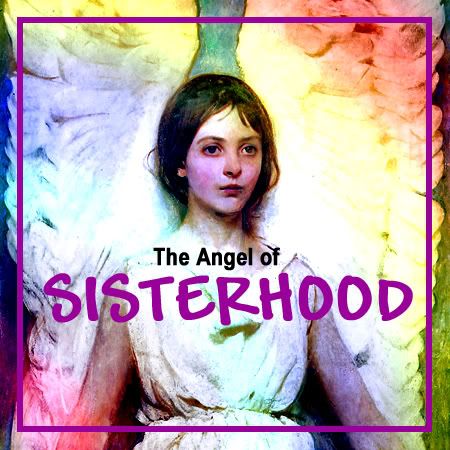
Angel of Sisterhood
Thayer, Abbott Handerson: Angel, c.1889;
Oil on canvas, 36 1/8 x 28 1/8 inches (92 x 71.5 cm);
National Museum of American Art, Smithsonian Institution, Washington DC, USA

The Angel of Sisterhood

by Anselm Grün

The Bible speaks again and again of philadelphia, the love between brothers or sisters. It was a heartening experience for the early Christians that they were not only able to experience their biological siblings as brothers and sisters, but that suddenly their whole community was turned into a community of brothers and sisters. The Angel of Sisterhood wants to show you how many brothers and sisters you will have if you only approach them as a brother or sister.

The basic experience of the first Christians was that all members of their Christian congregation had become their brothers and sisters. The reason for this was that all of them had the same Father. Because all of us may pray to the same Father in heaven, we are before and under this Father all brothers and sisters. Jesus calls everyone who does the will of God “brother and sister” (Mk 3, 35: “For whosoever shall do the will of God, the same is my brother, and my sister, and mother.”). If we seek the propinquity of His example and gather around Jesus Christ and are – like He is – ready to do the will of the Father, then we are brothers and sisters in Christ, then a new family is created in which all are equal. Jesus forbids the disciples to call themselves “Rabbi”: “But be not ye called Rabbi: for one is your Master, even Christ; and all ye are brethren” (Mt 23,8). The Angel of Sisterhood shall show us that we are all equal, that no one may put herself above the others. How often do we place ourselves not only in our social position above others, but also with our prejudices. We feel we are better than others, we elevate ourselves above them. We are fixated on the negative aspects of their personalities and don’t notice how we project our own faults on other people. This mechanism of projecting our own faults on others, and thus placing ourselves above them, is very common. We keep the others at a distance that way, and we protect ourselves from having to face the truth about ourselves that way. Who recognizes the truth about herself, stops looking for their mistakes in others. A person like this will truly be a brother or sister for every human being. Because they will recognize themselves in everyone of them.

To have a sister is very different from having a brother. I am lucky to have three sisters and three brothers in my family. There was the eldest sister who often took the place of the mother during my childhood. There is the Angel of Sisterhood who cares for us like a mother. But it is not the great mother who smothers us, but it is a sisterly caring which succours us. She does not stand above us, but she is at our side. She is tender and understanding. She fulfils needs that a mother cannot meet. There are sisters of your own age, companions on your way. With brothers with whom you go through thick and thin. With sisters you have intense conversations. You strike a chord in yourself that is not reached by brothers. And then there is the younger sister which is for good reason often called by certain English names. The Angel of Sisterhood brings me in contact with my anima, with my emotionality and my spirituality. Angels have always been brothers and sisters to us. Helmut Hark, Protestant priest and therapist, talks about an erotic love story between our soul and the angel as our spiritual companion. Looking at angels in art books, we often discover an erotic vibrancy in them. They strike a chord in our souls that is usually only brought to life by a person we love. The erotic power of the angel has a healing effect on us.

The experience of a sister can bring us in touch with out inner angel. The sister can become an angel herself, who strikes the tender chords of our souls and makes them sing, who brings our spiritual energies to life and has a healing effect on our broken heart. Therefore I wish that you may have many meetings with many Angels of Sisterhood. And I wish that you may become an inspiring and life-giving Angel of Sisterhood for others.

© by Anselm Grün, 50 Engel für das Jahr, 1997;
translation by JunoMagic.

Song for December 8:

Angel of Sisterhood

Amarilli mia bella
by Hans-Jürgen Hufeisen,
album “Pegasus – Melodien der Vier Winde”
(“Pegasus – Melodies of the Four Winds”)

Posted in JunoMagic | Tagged , | 3 Comments

An Advent Calendar for my Friends – December 7


Angel of Risk
GIOTTO di Bondone: No. 36 Scenes from the Life of Christ: 20.
Lamentation (detail), 1304-06;
Fresco, 200 x 185 cm, Cappella Scrovegni (Arena Chapel), Padua

The Angel of Risk

by Anselm Grün

Many think that the most important thing today is not to attract attention, not to make any mistakes. Then the career is not in danger. Then you won’t be criticized in your community. Then you don’t have to step down from your office. Then life will be a success. But this attitude of not being prepared to take any risks actually inhibits life. Who does not want to make any mistake at all, makes the biggest mistake of all. Because she doesn’t take chances, she doesn’t take risks. And thus nothing new can come into existence. In economy as well as in politics, in the Church as well as in society no one is willing to take risks any more. Because in that case they would be vulnerable. Things could go wrong. And that would be the catastrophe. Then you would be forced to leave your soft cushions and you would have to stand up for yourself and your mistakes in public. Many are afraid they would not survive that. They are so fixated on the approval and attention of other people that they don’t trust their instincts any more and don’t risk anything.

Psychology tells us that missing the courage to take risks is connected with missing a father, a condition common in our society. Under normal circumstances, it ought to be the father, who encourages us to dare something, to take a risk. If this positive experience of having a father is missing, if there is no father to encourage you, you need a substitute. This is the ideology, the unchangeable rule you hide behind. Security is everything. You don’t want experiments. Everything is supposed to stay the way it is. You don’t permit yourself to think of something new, much less to do something new. After all there is no guarantee that the new idea will work. So you don’t do it. Our times are characterized by a marked lack of fantasy as well as of courage to risk something. “Risk” is Italian originally and means danger and peril. Many demand a life without danger. You ought to get insurance against all kinds of dangers, so that nothing can happen to you. But the more effort you put in being safe, the more insecure you become. And slowly you lose your confidence. Everything has to be insured. No venture without sufficient safety. This leads to torpidity, as the current economic and political situation shows. We will only be able to get out of this dead end if we take a chance, if we risk making mistakes.

I wish that the Angel of Risk may encourage you to take your chance with life and to risk new ways for yourself and people around you. The Angel of Risk may back you up and bolster you so you are free to take a risk with yourself and to trust your impulses without trying to develop safeguards for everything. The world will be grateful to you, if you dare to do something new, if you don’t ask everyone and his brother for permission to implement your ideas. Because we experience every day that old solutions are failing. No one dares to go new ways in employment policy. Instead you hide behind platitudes and blame the others. Everyone is just waiting for the other to make a misstep. Then you can criticize them. But no one dares to take the first step. You are waiting to catch mistakes in others instead of risking a mistake yourself. I wish that the Angel of Risk may empower you with the freedom to also risk mistakes in order to open up new ways for yourself and people around you. Only if you trust the Angel of Risk you will make it possible for something new to grow into this world through you, can people discover new opportunities because of you.

© by Anselm Grün, 50 Engel für das Jahr, 1997;
translation by JunoMagic.

Song for December 7:

Angel of Risk

Die Flügel des Schutzengels (“The Wings of the Guardianangel”)
by Hans-Jürgen Hufeisen,
album “Engelskonzert” (“Concert of Angels”)

Posted in JunoMagic | Tagged , | 10 Comments

An Advent Calendar for my Friends: December 6


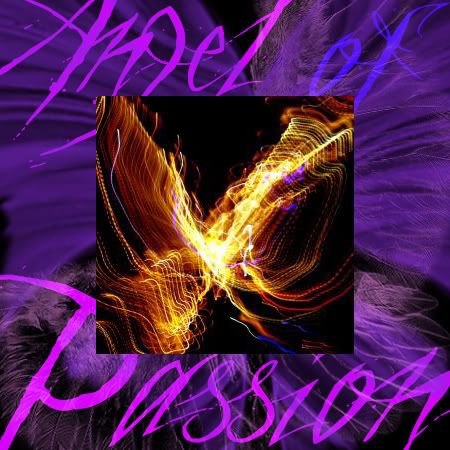
The picture at the centre is a photograph taken by Drez
at stock.XCHANG.

The Angel of Passion

by Anselm Grün

The Angel of Passion seems to contradict the Angel of Calm. But we need many angels to make life flower inside us. The Angel of Passion wants to challenge us, to live with the whole power of our hearts, not to simmer gently through our days. If a person is no longer capable of great passion, life grows boring and stale. It loses its flavour. This was certainly not what Jesus had in mind who challenged us to be the salt of the earth, to season this world with our vitality. Passions are natural driving forces in a person, which want to push her towards living and at last towards God. The Angel of Passion is meant to teach us the art of dealing with these driving forces so that they are powering our lives, that they don’t drive us, but that we can use them for the our real aim in life. We are not supposed to turn completely instinctual or animalistic, into driven personalities who just drift along, but to turn into personalities who force passions to serve life and to form life in all its variety.

Who is able to get passionately involved in something, can also fight passionately for life, and who can also be passionate in their spirituality. This shows a Chassidic tale: “A Chassid once accused a few other persons before Rabbi Wolf, saying they were turning the night into day playing cards. ‘This is good,’ said the Zaddik. ‘Like all people they, too, want to serve God and they don’t know how. But now they learn to keep awake and to stick with a project. Once they have perfected that, they only need to repent their ways – and what kind of servants of God they will be then!’

The early monks have spent a lot of thought on passions. Evagrius Ponticus († 399) counts nine passions a monk has to fight. For him, passions are positive forces. The point is not to extinguish them, but to integrate them in life. Passions are supposed to serve us and not the other way around. Apatheia, the goal in the battle with passions, is not a passionless condition, but being free of pathological ensnarement in passions, the integration of passions in everything what I do and think, a condition in which I am no longer dominated by passions, but in which they are at my disposal as powers, as virtus, as a virtue that is fit to make me alive.

Passions are free of any value judgement. If they turn good or evil depends on how I use them. Anger is a positive force that enables me to distance myself from others, to free myself from the power of others. But anger can also eat me up inside if I allow it dominate me. Sexuality can make me feel alive, but it can also oppress me. Neither in oppression nor expression of passions leads to vitality, but a responsible way of dealing with them. Who lives without passion has no “bite”, lacks power, misses the fullness of life. Many Christians have killed their passions in their striving for correctness. Thus they have turned boring. They are the salt of the earth no longer, but only a stale seasoning that no one is interested in any more. Jesus was a passionate champion of the poor and the disenfranchised. He talked full of passion about the merciful father and fought passionately against the cold-heartedness of the Pharisees who darkened the image of God with their narrow-minded legality.

The German word for passion is “Leidenschaft” and is derived from “zu leiden”, “to suffer”. And “leiden” meant in earlier times: going, driving, travelling. Who travels, gains experience, she has to go through something, suffers something. And that way the word took on the meaning of: suffering, feeling pain. Consequently, passion is connected with experience. Who gets involved in something, gets experienced, experiences something new and undreamt of. But just like every journey can also be troublesome, so is dealing with passions. It’s a tightrope walk. And all to easily a passion can grow stronger than is good for us. Then the passion dominates us instead of aiding us to live our lives with passion. The Angel of Passion may accompany you on your tightrope walk so you may become a truly passionate person, a person who passionately gets involved with others, a person, who passionately fights for making a humane way of living together here on earth possible.

© by Anselm Grün, 50 Engel für das Jahr;
translation by JunoMagic.

Song for December 6:

Angel of Passion

Goldene Kuppel (“Golden Dome”)
by Hans-Jürgen Hufeisen,
album “Pegasus – Melodien der vier Winde” (“Pegasus – Melodies of the Four Winds”)

Posted in JunoMagic | Tagged , | 2 Comments

An Advent Calendar for my Friends – December 5


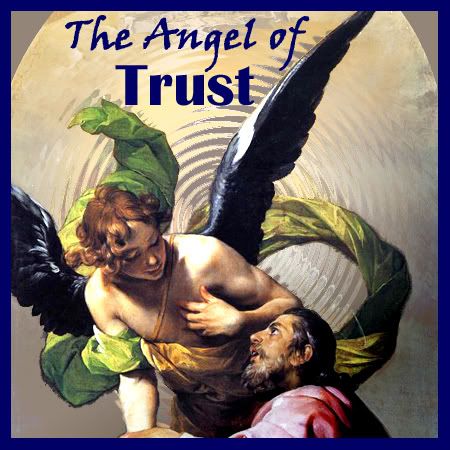
CANO, Alonso: Saint John the Evangelist’s Vision of Jerusalem, 1636-37.
Oil on canvas, 83 x 44 cm, Wallace Collection, London

The Angel of Trust

by Anselm Grün

Again and again I hear the lament: “I cannot trust. As a child I never learned to trust blindly. My trust has been betrayed so often. Even if I really want to, I can’t manage to trust someone else.” People like that are and will remain lonely. They don’t dare to reach out for someone, because of their fear to be disappointed again. They also don’t trust in someone’s love. At once there are doubts: “He only loves me out of pity, or because he wants something from me, because he can use me for his own ends.” For people like that it will be of little help if I tell them, “You simply need to have faith.” They would like to have faith, but they can’t. The reason for this usually can be found in their childhood. And they could not choose that. One person has had the experience of the reliability of her parents from childhood onwards. Now she is able not only to trust her parents, but to meet other people with the same confidence. Yes, she has a basic confidence in life, in being, in God. That way she can chance life. She can even take on some risks, because she is supported by her faith that everything will okay.

When I wish you the Angel of Trust, then I trust that you will not be left with the distrust you have acquired as a child. You can learn trust. You can be student of the Angel of Trust. However, you can’t simply decide to be trusting right this minute. Trust needs to grow. There is a need for positive experiences of other people who prove themselves to be trusty and trustworthy. But it also requires your willingness to trust trust. If you watch your boyfriend or girlfriend with your distrustful eyes, they have no chance to prove their trustworthiness to you. You will interpret everything they say or do in a negative way. You have at least to try to trust. You ask how that’s possible? You can pretend that there is trust. You can conduct the experiment of how you feel if you simply believe everything your friend tells you, if you trust him or her blindly. Of course doubts will sneak back into your trust again. But first, try for at least a week to trust your friend. You will see that this feels good and how you are more and more proven right to trust him or her.

Of course there is always a risk involved if you trust. You don’t have a guarantee that your trust is justified. What helps me with that is that I feel supported in a deeper sense. I feel myself supported by a higher power. Even if a person abuses my trust, I can still place my trust in God Who holds me in His good hands. This trust in God keeps me from falling into the abyss of depression, if a person abuses my trust.

Forever people have trusted in guardian angels accompanying them. They have called on these guardian angels not only in the traffic on the streets, but whenever they were afraid that their trust could be abused, whenever they were in doubt if they should trust someone. I wish that you may forever be surrounded by the Angel of Trust. Then you don’t need to be 100% certain if you can really trust a particular person right this moment or not. You don’t lose trust even if someone disappoints you. The Angel of Trust will stay with you and will boost your confidence again to trust yourself and to risk trusting other people as well. Because that’s what trust is all about after all: it’s not about something I can control.

Because taking chances is inescapably linked with having faith, it’s good to know that there is an Angel of Trust around me. The angel is in contact with that which is beyond my control. At a deeper level he gives me the confidence I need to trust people. He leads me to a kind of trust that can never be wholly destroyed by people because it is also beyond their control.

This trust gives me the liberty to trustingly meet others. And it enables me to chance life, to take a risk. “No risk, no gain,” according to a proverb. Who wants to control the success of everything she attempts, will miss out on life. The Angel of Trust wants to introduce you more and more to trusting life and trusting people. You will see that you are not chained to the brittle kind of trust you have learned as a child. There’s angel who wants to place your trust on solid ground, on a ground on which you can build your life.

© by Anselm Grün, 50 Engel für das Jahr, 1997;
translation by JunoMagic

Song for December 5:

(Click pic!)

Vertrauen (“Trust”)
by Hans-Jürgen Hufeisen,
album “Gold, Weihrauch und Flöte” (“Gold, Incense and Flute”)


Posted in JunoMagic | Tagged , | 2 Comments

An Advent Calendar for my Friends – December 4

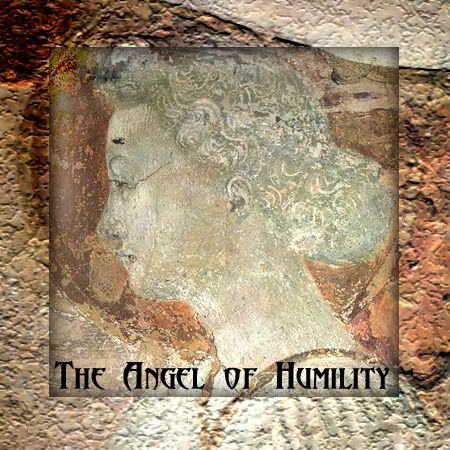
Angel of Humility
An Angel (detail), c. 1435.
Fresco, San Miniato al Monte, Florence

The Angel of Humility

by Anselm Grün

The German word for humility is “Demut” and is derived from the Old High German diomuti “willing to serve”. “Serving” meant in the Germanic system of fealty “being a servant, being a runner for someone”. With this term the ancient Germans translated the Latin word humilitas. Thus they interpreted the Latin word in their own way. For them humility meant the courage to serve, to serve life, to stand up for others, to run for others. In this meaning lies the willingness to look beyond yourself and your needs, to free yourself of yourself, to stand up for others. But with this interpretation the biblical expression of humilitas is not yet fully grasped, but just one aspect of its meaning.

Humilitas is derived from humus, earth, ground. Humilitas means the courage to accept our own earthliness, the courage to come to terms with our truth – that we have been taken from the earth, that we are human beings of flesh and blood, with urges and vital needs. A person who does not have the courage to face this personal truth, is blind. This exemplifies the famous story of the healing of the blind in Joh 9. A person is blind from birth. Obviously he has suffered through a childhood so horrible that the only thing left to him was to close his eyes to reality. He has made up his own world in order to survive. To counter negative images that others have forced upon him, he has created a high ideal. But this ideal does not conform with his own reality. Therefore he had to close his eyes to it. Jesus heals him by spitting on the ground, on the earth, on the humus and preparing a pulp of earth with his spittle. This dirty pulp he puts on the eyes of the blind to tell them thus: “You have been taken from the earth as well. Come to terms with the dirt that is within you. Only then you will be able to see again. You need courage for the truth, for your humanity, for your own earthliness. Then you will be able to walk this world with open eyes.”

Humility as courage for your own truth is a sign for true spirituality among monks. Who has been made presumptuous by the spiritual path, who puts herself above others who are controlled by their moods and urges, has not met her own truth yet. Hermann Hesse relates this in his book “Siddharta” in a fascinating way. There is Siddharta who at first leads a life of the most demanding asceticism, but fails in that. Then he goes out into the world and embraces all of his desires. Finally he becomes tired of this way of life and abandons the world again. At the river he suddenly experiences the great revelation. There he sees the “child men”, how they cross the river on their boat. Previously he would have put himself above them. But now he feels with them. He experiences a deep sense of solidarity with them. He is just like them. He feels pity for them, but also hope. He judges no one, but he knows: for all of them there is a greater love that can change everything. The Angel of Humility has taken him to task and taught him that solidarity with the people and with yourself can only be experienced if you are willing to descend to them and your own truth.

Humble persons are not persons who humiliate themselves, who shirk all challenges because they don’t feel up to them. They are not deeply afflicted persons who debase themselves in false subservience. Instead they are persons who have the courage to face their own truth and who appear modest in consequence. They know that all abysses of human character also lie within themselves. Therefore they do not judge anyone. Because they bowed down to the earth of their own truth, they can become Angels of Humility who lift up afflicted and broken people.

Humilitas also has something to do with humour. The humble has humour. She can laugh about herself. She has distance to herself. She can look at herself placidly, because she permits herself to be who she is, a human being of earth and heaven, a human being with faults and weaknesses and at the same time loveable and precious. I wish that the Angel of Humility may give you the courage to to accept and love yourself in your earthliness and humanity. Then you will inspire hope and confidence in everyone you meet. The Angel of Humility will create an area around you that enables people to find the courage to descend to their own reality and thus to ascend to true life.

© by Anselm Grün, 50 Engel für das Jahr, 1997;
translation by JunoMagic.

Song for December 4:

Angel of Humility

Erdengesang
(“Song of the Earth”)
by Hans-Jürgen Hufeisen,
album “Pegasus – Melodien der Vier Winde” (“Pegasus – Melodies of the Four Winds”)

Posted in JunoMagic | Tagged , | 2 Comments